Computer simulation of combat between phalanges
Hi all,
Today I go out a little from the Byzantine to go back several centuries, the classical Greece, using this page discovered by a friend (thanks David)
These a website setting out the thesis written by a computer (I think from Australia) and has recreated a fight between Greek phalanxes by computer simulation of the individual hoplites, with 5 simple rules to follow:
- avoid being pushed.
- Push the contrary
- Stay close to the man on your right (so to protect your shield)
- Attacking the enemy
- Fleeing moral failure of the
Here 's the link: http:/ / www.ddv.co.nz/hoplites/ as you will see is quite curious, and for the comment that the computer of software is done in Java. One of the links is a very educational video the fight between two phalanges, which shows the victory of the two right wings, as it was said that happened in the battles of ancient Greece.
Enjoy it. Greetings
Saturday, February 26, 2011
Saturday, February 19, 2011
Inurl Multicameraframe?mode-
Latin edition
Hi all,
This week the publisher has confirmed that Justinian's dream to jump the pond to the Americas.
Both Chile and Uruguay will put the book on sale next month, and Mexico will launch a print run of its own. You are waiting for copies to arrive Colombia and Miami, so in the first half of this year will be virtually all countries where Editions B is present. I miss Argentina and Venezuela, of which I have no news yet and I guess that takes a little longer. But it promises.
As a digital edition, the publisher told me that are starting to distribute news from the last two months and some of the backlist novels, it seems they start to move into the digital market. So far they have not chosen any of mine, but I hope that their turn at some point. If I have news about it tell you.
And finally, I leave here the link to an interview about the dream of Justinian in the blog's history in my books, I hope you like it.
http://www.zzona.com/blogeva/2011/02/16/entrevista-a-salvador-felip-autor-de-el-sueno-de-justiniano/
Greetings Hello
Hi all,
This week the publisher has confirmed that Justinian's dream to jump the pond to the Americas.
Both Chile and Uruguay will put the book on sale next month, and Mexico will launch a print run of its own. You are waiting for copies to arrive Colombia and Miami, so in the first half of this year will be virtually all countries where Editions B is present. I miss Argentina and Venezuela, of which I have no news yet and I guess that takes a little longer. But it promises.
As a digital edition, the publisher told me that are starting to distribute news from the last two months and some of the backlist novels, it seems they start to move into the digital market. So far they have not chosen any of mine, but I hope that their turn at some point. If I have news about it tell you.
And finally, I leave here the link to an interview about the dream of Justinian in the blog's history in my books, I hope you like it.
http://www.zzona.com/blogeva/2011/02/16/entrevista-a-salvador-felip-autor-de-el-sueno-de-justiniano/
Greetings Hello
Thursday, February 17, 2011
Very Smelly Pee And Gas
Lenovo And Lenovo Y560
motherboard, also known as motherboard or motherboard (motherboard English or mainboard) is a printed circuit board which connects the components that make up the computer or computer. Has installed a series of integrated circuits, among which is the chipset, which serves as a hub between the microprocessor, the Random Access Memory (RAM) slots explansión and other devices.
What is Hardware?
Hardware are the physical devices such as motherboard, CPU or monitor.
There are several types of Hardware:
Input Devices
The Input Devices are those through which data is sent outside the central unit processing, such as keyboard, mouse, scanner, or microphone, among others.
Output Devices
The Output Devices are those that receive the data processed by computer and can externalize through peripherals such as monitor, printer, scanner, plotter, speakers, etc.
Devices Input / Output (Peripherals mixed): There are devices that are both input and output peripherals such as these storage, CDs, DVDs, as well as modems, faxes, USB, or network cards.
Hardware Devices Examples
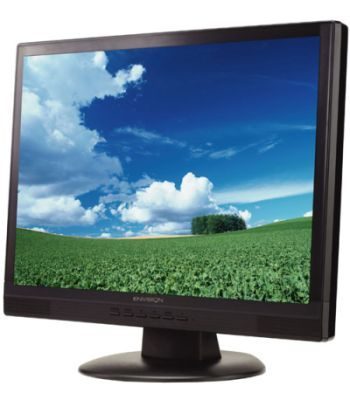
Monitor but is also commonly called "Screen" is a output device, using an interface shows the results of a computer processing
Brands: Sure, Fujitsu, HP, Lenovo, Samsung
Cost: $ 340,000 Colombian Pesos
Keyboard is an input device or devices, in part inspired by the keyboard of the typewriter that uses an arrangement of buttons or keys, to act as mechanical levers or electronic switches that send information to the computer.
Brands: Genius, Sure, Logitech, HP
Cost: 19,999 Colombian pesos
Printers
A printer is a computer peripheral that can produce a permanent copy text or graphics of documents stored in electronic form, print them on physical media, usually paper or transparencies, ink cartridges or laser technology
Brands: HP, Epson, Canon, Brother.
Costs: $ 189,000
motherboard, also known as motherboard or motherboard (motherboard English or mainboard) is a printed circuit board which connects the components that make up the computer or computer. Has installed a series of integrated circuits, among which is the chipset, which serves as a hub between the microprocessor, the Random Access Memory (RAM) slots explansión and other devices.
Brands: Asus, Gigabit, Intel, ASRock, AMD.
Costs: 320,000 Colombian pesos
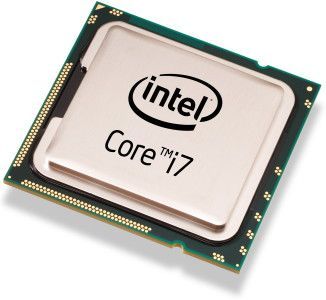
The Micropocesador, or simply processor, is the integrated circuit central and most complex of a computer or computer, by way of illustration, it is usually associated by analogy as the "brains" of a computer
Brands: Intel, AMD
Costs: $ 789,900
random access memory (in English: random-access memory, RAM acronym) is the memory where the processor receives instructions and saves the results.
Brands: Kingstong, Corsair, GSkill, OCZ Supertalent.
Costs: $ 34,999
What is software?
Software intangible is the whole set of data and computer programs.
Software
The Software is the software and intangible allows the computer to perform intelligent tasks, leading to the physical components or hardware with instructions and data through different types of programs.
The Software are the application programs and operating systems, which according to the functions they perform may be classified as:
System Software
is called or System Software Base Software to all programs that serve to interact with the system, giving control over the hardware as well as to support other programs.
The System Software is divided into:
OS The OS is a set of programs that manage computer resources and control its operation.
A OS performs five basic functions: Providing User Interface, Resource Management, File Management, Task Management and Support Service.
Device Drivers
The Device Drivers are programs that allow other higher-level program as an operating system interacting with a hardware device.
Utility Programs
The Utility Programs perform various functions to solve specific problems, in addition to general tasks and maintenance. Some are included in the operating system.
Application Software
The Application Software are programs designed for and by users to facilitate specific tasks computer, such as office applications (procesador de texto, hoja de cálculo, programa de presentación, sistema de gestión de base de datos...), u otros tipos de software especializados como software médico, software educativo, editores de música, programas de contabilidad, etc.
Ejemplos de Software:
Software de Diseño y Edición de Musica e Imágen
Photoshop is the software that is redefining the digital images using new tools for effective photography and innovative features to make complex selections in the pictures, paintings, realistic and smart touches
or Programming Software Development
The Programming Software is the set of tools that allow developers to write computer programs using different alternatives and programming languages.
This software mainly includes compilers, interpreters, assemblers, linkers, debuggers, text editors and integrated development environment that contains the old tools, and usually has an advanced graphical user interface (GUI).
Software Examples:
Microsoft Visual Studio is an integrated development environment (IDE for short English) for Windows operating systems. Supports multiple languages programming such as Visual C + +, Visual C #, Visual J #, ASP.NET and Visual Basic. NET, but now have developed the necessary extensions for many others.
Java
Java is a programming language, object oriented, developed by Sun Microsystems in the early 90's the language itself takes much of its syntax from C and C + + but has a simpler object model and remove low-level tools, which often lead to many errors, such as direct manipulation of pointers or memory.
Friday, February 11, 2011
Pakistani Wedding Table Setting
The floor plates guard
all,
As Coriolis promised, this week plays a little less tricky entry as above, so I will focus on one of the most exotic Byzantine army units from the tenth century, the guard plates.
name or Varangians floor plates, was used by the Russians, from those who came to Byzantium, as initially described as the Scandinavians. It is likely that the word derives from the Norse word Vár , que podría traducirse por 'compromiso' o 'juramento'. Describía a un grupo de guerreros que juraban lealtad a otro, observando un código de conducta común y compartiendo los posibles beneficios de la lucha.
Los primeros escandinavos que entraron en contacto con los bizantinos eran en realidad suecos del norte de Rusia, que llegaron a Constantinopla en 838 a través de los grandes ríos que cruzaban la estepa. Poco después, en 860, tras un fallido intento de saqueo de la capital del imperio, se asentaron en Rusia, alcanzando sin mucha tardanza un pacto con el emperador, por el cual se comprometían a enviarle levas de guerreros, a los cuales los bizantinos llamaban 'Rus'.
It is known that about 700 of these 'rus' took part in the attack Byzantine Crete in 911, although it was not until 988 when Emperor Basil II received 6000 men of Prince Vladimir of Kiev. Because of the intense heat of war and its obvious military qualities, Basil became his bodyguard. From that position, the floor plates behaved loyally in most cases, although there are notes in the story that reveals some cracks in such deep fidelity. For example, Harald Hardrada, who later became king of the Norwegians, was charged with illegally appropriating imperial taxes, and even the Norse sagas show him as the man who blinded the Emperor Michael V and kidnapped his niece Mary. Michael VII, on the other hand, was attacked in his own palace guards by a group of drunk (it goes without saying that the floor plates faithfully complied with the topic of drunken Vikings, to the extent that they are nicknamed 'wineskins') and in 1204 when only their axes seemed to contain the Crusaders who fought to get into Constantinople, agreed to fight only after demanding a generous increase in its paid negligible (which was about 15 nomisma, gold, per month)
In the eleventh century, the composition of the floor plates began to shift, and the Anglo-Danish clicking the emperor's service, until the latter occupied most of the seats in the guard. The last strong reference to the existence of the watch floor timber dates from the early fifteenth century, and although not specifically named in the chronicles of the fall of Constantinople, it is possible that a group of these soldiers still listed among the witnesses of that been referred to as 'imperial guard units'
part of its weapons, despite carrying Psellus notes that all rhomphaia shield and the single-edged sword that hung over the shoulder of the right shoulder, the weapon that characterized this unit was the ax, named multiple times in the chronicles of the time. Needless to say, although some many learned Greek during his stay in the big city problems with Nordic language could always be present, so the commanding officer, the Akolouthos , he was accompanied by a translator Byzantine.
And that's it for today
all,
As Coriolis promised, this week plays a little less tricky entry as above, so I will focus on one of the most exotic Byzantine army units from the tenth century, the guard plates.
name or Varangians floor plates, was used by the Russians, from those who came to Byzantium, as initially described as the Scandinavians. It is likely that the word derives from the Norse word Vár , que podría traducirse por 'compromiso' o 'juramento'. Describía a un grupo de guerreros que juraban lealtad a otro, observando un código de conducta común y compartiendo los posibles beneficios de la lucha.
Los primeros escandinavos que entraron en contacto con los bizantinos eran en realidad suecos del norte de Rusia, que llegaron a Constantinopla en 838 a través de los grandes ríos que cruzaban la estepa. Poco después, en 860, tras un fallido intento de saqueo de la capital del imperio, se asentaron en Rusia, alcanzando sin mucha tardanza un pacto con el emperador, por el cual se comprometían a enviarle levas de guerreros, a los cuales los bizantinos llamaban 'Rus'.
It is known that about 700 of these 'rus' took part in the attack Byzantine Crete in 911, although it was not until 988 when Emperor Basil II received 6000 men of Prince Vladimir of Kiev. Because of the intense heat of war and its obvious military qualities, Basil became his bodyguard. From that position, the floor plates behaved loyally in most cases, although there are notes in the story that reveals some cracks in such deep fidelity. For example, Harald Hardrada, who later became king of the Norwegians, was charged with illegally appropriating imperial taxes, and even the Norse sagas show him as the man who blinded the Emperor Michael V and kidnapped his niece Mary. Michael VII, on the other hand, was attacked in his own palace guards by a group of drunk (it goes without saying that the floor plates faithfully complied with the topic of drunken Vikings, to the extent that they are nicknamed 'wineskins') and in 1204 when only their axes seemed to contain the Crusaders who fought to get into Constantinople, agreed to fight only after demanding a generous increase in its paid negligible (which was about 15 nomisma, gold, per month)
In the eleventh century, the composition of the floor plates began to shift, and the Anglo-Danish clicking the emperor's service, until the latter occupied most of the seats in the guard. The last strong reference to the existence of the watch floor timber dates from the early fifteenth century, and although not specifically named in the chronicles of the fall of Constantinople, it is possible that a group of these soldiers still listed among the witnesses of that been referred to as 'imperial guard units'
part of its weapons, despite carrying Psellus notes that all rhomphaia shield and the single-edged sword that hung over the shoulder of the right shoulder, the weapon that characterized this unit was the ax, named multiple times in the chronicles of the time. Needless to say, although some many learned Greek during his stay in the big city problems with Nordic language could always be present, so the commanding officer, the Akolouthos , he was accompanied by a translator Byzantine.
And that's it for today
Greetings
Saturday, February 5, 2011
Drivers For Opptiplex Gx620 Windows Seven
The third gender in Byzantium eunuchs. Presentation
Hi all,
Returning entries on Byzantine themes, today I wanted to touch the subject of eunuchs, quite numerous in the old and very appreciated court.
When we think of eunuchs, we do have in mind those men who are their sexual organs had been removed, or at least the testicles. However, for the Byzantines, the basic definition of eunuch was either incapable of procreation, while the way in which this was not possible was the least. For example, those with physical or psychological problems that made them impotent, despite being physically complete, eunuchs were also considered.
Eunuchs were very frequent in the court because, since they could not have children, it was felt that no charges accrue to leave them to the offspring as in other cases. Servants were considered perfect because it was believed that their lack of sexuality allowed them to dump the intelligence in the tasks. Despite this, the nobles hated them for their career and access to government positions, while envied the ease clergy celibacy, as the young castrated had no sexual appetites. Furthermore, they could reach the office of bishop (only denied access to the patriarchy)
The scorn that they professed to be translated into insults as effeminate beardless, unhealthy or sterile. It was also said that eunuchs cried a lot because they had lost the ability to control the emotions of men, they represented a disproportionate appetite for food and drink and gold. It was supposed to be angry easily and were accused of not looking at the eyes when talking, walking with members loose, talking too much or laugh inappropriately.
The eunuchs could be sexually active with both men and women alike. That meant an indictment of the church, because it allowed sex only for procreation, and if they could not have children intercourse could only be through vice and pleasure. They were considered taxable persons in relationships with men.
The two main ways of castration were as follows: The first is done by placing the child in a hot bath until the testicles are relaxed, then crushed with your fingers. The second option was a small incision to remove the eggs from the scrotal sac. Were made usually from age 7.
Even within the empire
castration was forbidden, many parents engaged with their children illegally because they knew that if he survived, he had many options to enter the court and thereby ensure the sustenance for the whole family.
And that's it for today
Hi all,
Returning entries on Byzantine themes, today I wanted to touch the subject of eunuchs, quite numerous in the old and very appreciated court.
When we think of eunuchs, we do have in mind those men who are their sexual organs had been removed, or at least the testicles. However, for the Byzantines, the basic definition of eunuch was either incapable of procreation, while the way in which this was not possible was the least. For example, those with physical or psychological problems that made them impotent, despite being physically complete, eunuchs were also considered.
Eunuchs were very frequent in the court because, since they could not have children, it was felt that no charges accrue to leave them to the offspring as in other cases. Servants were considered perfect because it was believed that their lack of sexuality allowed them to dump the intelligence in the tasks. Despite this, the nobles hated them for their career and access to government positions, while envied the ease clergy celibacy, as the young castrated had no sexual appetites. Furthermore, they could reach the office of bishop (only denied access to the patriarchy)
The scorn that they professed to be translated into insults as effeminate beardless, unhealthy or sterile. It was also said that eunuchs cried a lot because they had lost the ability to control the emotions of men, they represented a disproportionate appetite for food and drink and gold. It was supposed to be angry easily and were accused of not looking at the eyes when talking, walking with members loose, talking too much or laugh inappropriately.
The eunuchs could be sexually active with both men and women alike. That meant an indictment of the church, because it allowed sex only for procreation, and if they could not have children intercourse could only be through vice and pleasure. They were considered taxable persons in relationships with men.
The two main ways of castration were as follows: The first is done by placing the child in a hot bath until the testicles are relaxed, then crushed with your fingers. The second option was a small incision to remove the eggs from the scrotal sac. Were made usually from age 7.
Even within the empire
castration was forbidden, many parents engaged with their children illegally because they knew that if he survived, he had many options to enter the court and thereby ensure the sustenance for the whole family.
And that's it for today
Greetings
Subscribe to:
Posts (Atom)